
Introduction
The Triumph of the Divine Mother
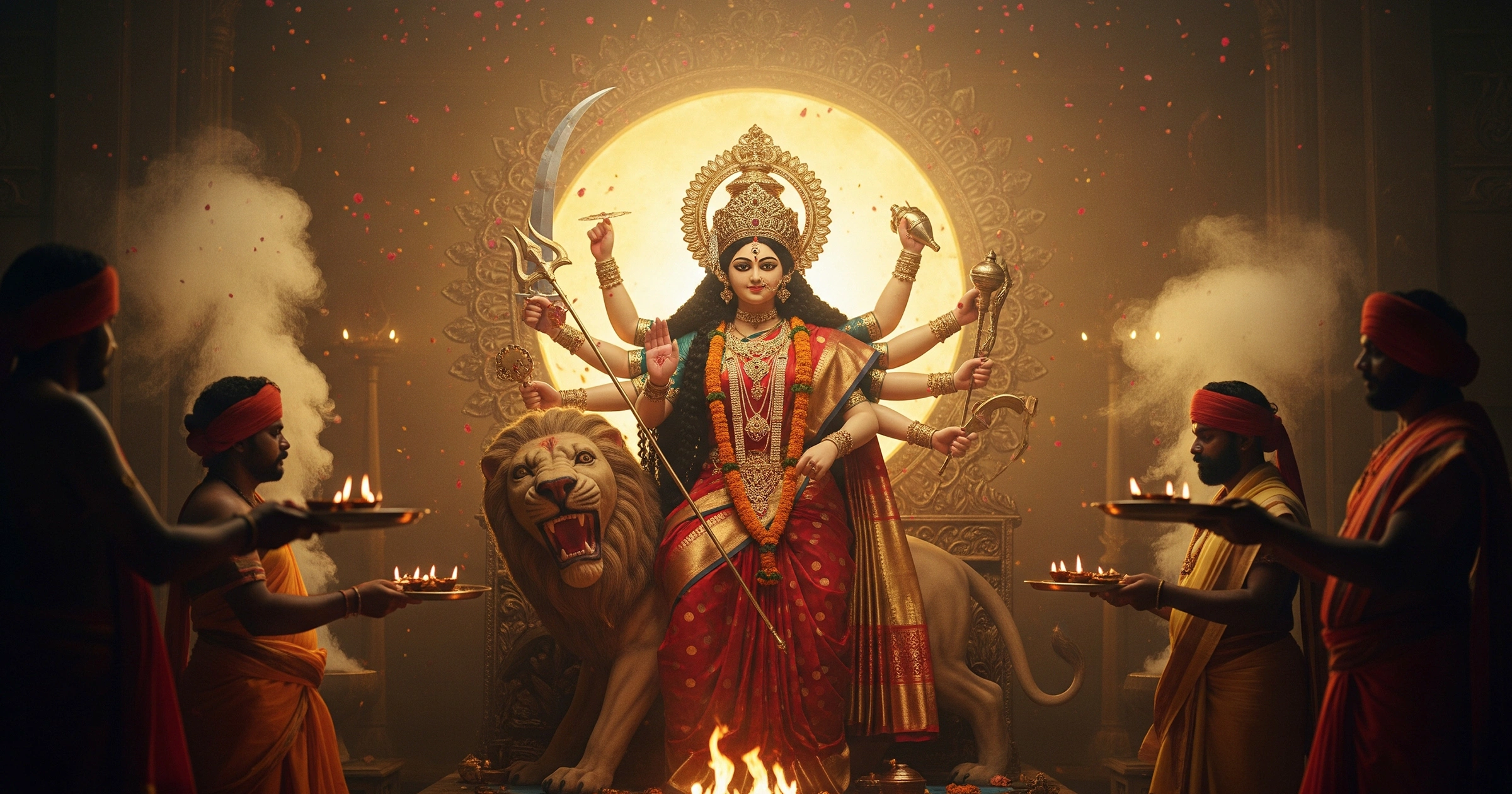
Durga Puja, also known as Sharodotsav, is one of India’s most beloved and grand festivals, celebrating the victory of Goddess Durga over the demon Mahishasura. It is a festival of devotion, power, music, celebration, and cultural pride, symbolizing the eternal truth that good always triumphs over evil.
In 2026, Durga Puja will be celebrated from Monday, October 19 to Friday, October 23, with:
- Maha Ashtami – October 21
- Vijaya Dashami (Dussehra) – October 23
History & Significance
The Spiritual Significance of Durga Puja
Durga Puja honors Maa Durga, the embodiment of Shakti, who restores cosmic balance by destroying evil forces. Beyond mythology, the festival inspires devotees to conquer their inner demons — ego, greed, anger, jealousy, and fear — through devotion, surrender, and self-reflection.
The Myth of Mahishasura Mardini
According to ancient scriptures:
- The demon Mahishasura was granted a boon that no man or god could defeat him.
- Consumed by power, he attacked heaven and caused chaos across the universe.
- To protect creation, the Trinity — Brahma, Vishnu, and Shiva — combined their divine energies to create Goddess Durga, the invincible warrior.
Armed with celestial weapons and riding a lion, she fought Mahishasura for nine days and nights and finally defeated him on Vijaya Dashami, symbolizing the victory of light over darkness and dharma over adharma.
Celebration & Rituals
Durga Puja is celebrated with immense devotion and cultural splendor, especially in West Bengal, Odisha, Assam, Bihar, Jharkhand, Tripura, and Maharashtra. Cities transform with beautifully crafted pandals, traditional music, dhak drumming, classical dances, devotional chanting, and community feasts.
Day-by-Day Rituals of Durga Puja 2026
| Day | Significance | Ritual Highlights |
| Mahalaya – Oct 12 | Invocation of Goddess Durga’s descent to earth | Early morning recital of Chandi Path |
| Shashthi – Oct 19 | Unveiling of Durga idol | Kalash Sthapana, welcoming rituals |
| Saptami – Oct 20 | Beginning of main puja ceremonies | Mahasnan, sacred bathing rituals of the idol |
| Ashtami – Oct 21 | Most important day of devotion | Pushpanjali, Kumari Puja, grand Aarti |
| Navami – Oct 22 | Worship of Durga’s fierce form | Chanting, prayers, ceremonial offerings |
| Vijaya Dashami – Oct 23 | Farewell to the Goddess | Sindoor Khela, procession and immersion (Visarjan) |
Cultural Celebrations
Durga Puja is more than a religious festival — it is a celebration of heritage, art, unity, and joy. The days are filled with traditional dances, cultural performances, decorated pandals, artistic idols, and devotional songs played across neighborhoods and temples.
Special bhog (prasad) such as khichdi, labra, payesh, and sweets like sandesh and rasgulla are prepared and distributed to devotees.
Families and communities come together in celebration, strengthening social bonds and spreading joy.
Conclusion
Durga Puja symbolizes divine strength, protection, and the eternal victory of truth. It inspires everyone to embrace inner courage, overcome negativity, and walk the path of righteousness with faith and purity.
As Maa Durga returns to her celestial abode after Visarjan, devotees offer prayers for peace, prosperity, wisdom, and protection.
May the blessings of Maa Durga fill your life with positive energy and divine strength.
Jai Maa Durga!
FAQs on Durga Puja – Worship of Goddess Durga
- What is Durga Puja and why is it celebrated?
Durga Puja is a major Hindu festival dedicated to Goddess Durga. It commemorates her victory over the demon Mahishasura, symbolizing the triumph of good over evil, righteousness over injustice, and divine power over negativity.
- How long does Durga Puja last?
Durga Puja is celebrated over ten days, with the main festivities taking place during the last five days—Shashthi, Saptami, Maha Ashtami, Maha Navami, and Vijayadashami. These days include special rituals, prayers, and cultural celebrations.
- What are the main rituals of Durga Puja?
The main rituals include Bodhan (invocation), Pushpanjali, Sandhi Puja, Kumari Puja, Dhunuchi dance, Sindoor Khela, Aarti, and Durga Visarjan. Devotees also chant hymns, offer flowers, and seek the blessings of Goddess Durga.
- What are the benefits of worshipping Goddess Durga?
Worshipping Goddess Durga is believed to bring courage, protection, wisdom, prosperity, inner strength, and peace. Devotees pray to overcome obstacles, remove negative energies, and receive divine blessings for a happy and successful life.
- Can anyone participate in Durga Puja?
Yes. Durga Puja is open to everyone regardless of age or background. People participate by offering prayers, visiting pandals, singing devotional bhajans, attending aarti, and celebrating the festival with family and the community