
The Light That Dispels Darkness
Diwali, also known as Deepavali, is India’s most radiant and widely celebrated festival, symbolizing the victory of light over darkness, knowledge over ignorance, and good over evil. The festival marks Lord Rama’s return to Ayodhyaafter 14 years of exile and his victory over Ravana. It is also the sacred night when Goddess Lakshmi, the goddess of wealth and prosperity, is worshipped with devotion.
In 2026, Diwali will be celebrated on Monday, November 9, with Lakshmi Puja performed during the auspicious evening Pradosh Kaal.
History & Significance
Spiritual Meaning of Diwali
Beyond lights, fireworks, and celebration, Diwali represents the awakening of inner divine light — the power of truth, purity, and goodness that guides humanity toward righteousness and wisdom. It is a time of spiritual cleansing, self-reflection, forgiveness, and new beginnings.
Multiple Cultural and Religious Meanings
Diwali carries unique historical and spiritual relevance across Indian traditions:
| Community | Significance |
| Hinduism | Return of Lord Rama to Ayodhya and the worship of Goddess Lakshmi |
| Jainism | Attainment of Moksha by Lord Mahavira |
| Sikhism | Bandi Chhor Divas — liberation and freedom |
| Mahabharata | Return of the Pandavas from 12 years of exile |
The lighting of diyas (oil lamps) represents banishing negativity and inviting divine grace, peace, and prosperity.
Celebration & Rituals
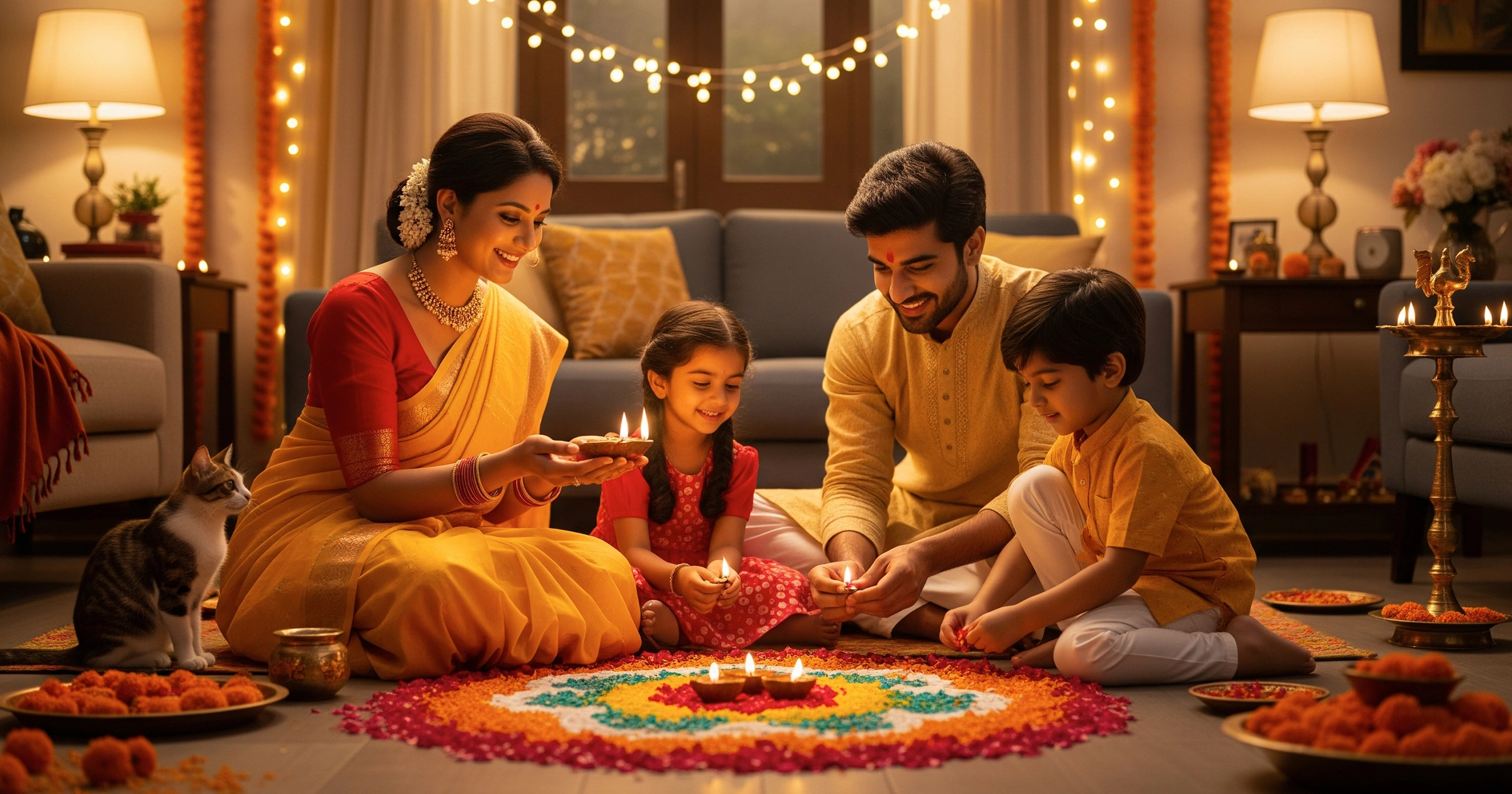
Diwali preparations begin days in advance, including cleaning and decorating homes, preparing sweets, buying new clothes, exchanging gifts, and illuminating homes with lamps and colorful rangoli designs.
Lakshmi Puja 2026 — Rituals and Procedure
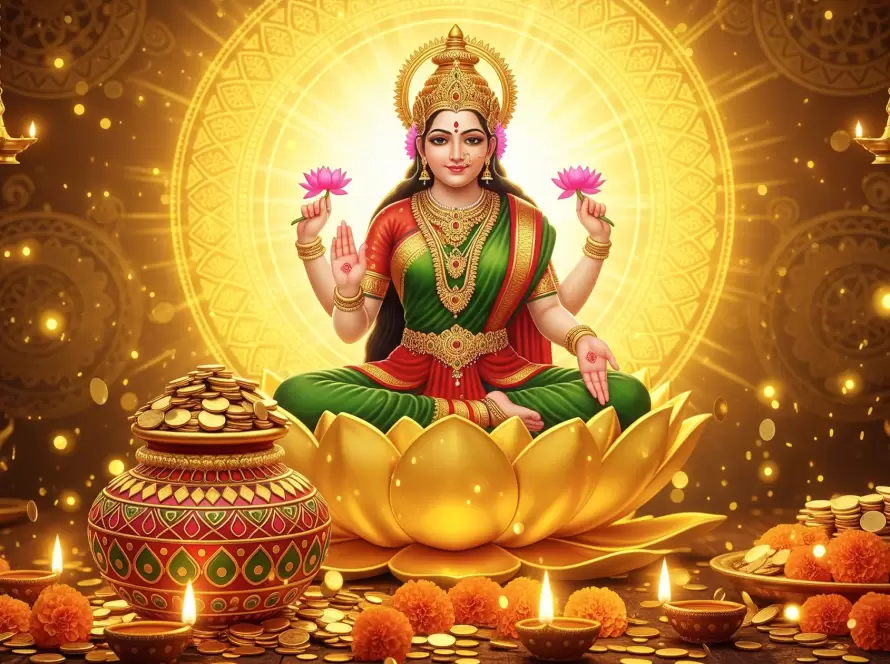
Lakshmi Puja is the most sacred part of Diwali evening, performed to invoke the blessings of prosperity, abundance, and good fortune.
Step-by-Step Puja Vidhi
- Clean & Decorate the home and entrance with rangoli and lamps.
- Arrange the altar with idols or images of Goddess Lakshmi, Lord Ganesha, and Lord Kubera.
- Offer flowers, rice, coins, and sweets symbolizing purity and wealth.
- Chant sacred mantras, including:
- “Om Shreem Maha Lakshmyai Namah”
- “Om Gan Ganapataye Namah”
- Perform Aarti while lighting incense and diyas.
- Distribute prasad and share blessings with family and neighbors.
Traditions & Cultural Celebrations
Across India, Diwali is celebrated with diverse cultural flavors:
North India – Fireworks, diyas, Ramayana plays (Ram Leela)
West India – Business communities celebrate new accounting books (Chopda Pujan)
South India – Naraka Chaturdashi rituals and early morning oil baths
East India – Kali Puja and grand pandal installations
Across the world – Community gatherings and festivals of lights
Typical Diwali celebrations include:
- Lighting diyas and candles inside and outside homes
- Decorating with flowers and rangoli
- Enjoying traditional sweets such as laddoo, barfi, and jalebi
- Exchanging gifts and festive greetings
- Bursting fireworks in many regions
Conclusion
Diwali is not just a festival but a reminder to let kindness triumph over anger, hope over despair, and light over darkness. It inspires unity, happiness, spiritual renewal, and the strengthening of family bonds.
May this Diwali bring peace, prosperity, and joy into every home.
Wishing you a blessed and radiant Deepavali!
FAQs on Diwali – Festival of Lights
- What is Diwali and why is it celebrated?
Diwali, also called Deepavali, is the Festival of Lights that celebrates the victory of good over evil, light over darkness, and knowledge over ignorance. It also marks Lord Rama’s return to Ayodhya after 14 years of exile.
- How is Diwali celebrated in India?
People celebrate Diwali by lighting diyas, decorating homes with rangoli, performing Lakshmi and Ganesha Puja, sharing sweets, exchanging gifts, and spending time with family.
- What is the significance of Lakshmi Puja during Diwali?
Lakshmi Puja is performed on the main day of Diwali to seek the blessings of Goddess Lakshmi for wealth, prosperity, happiness, and success.
- What are the five days of the Diwali festival?
The five days of Diwali are Dhanteras, Naraka Chaturdashi (Chhoti Diwali), Lakshmi Puja (Diwali), Govardhan Puja, and Bhai Dooj, each with its own religious and cultural significance.
- What are the benefits of celebrating Diwali?
Diwali promotes positivity, family bonding, gratitude, prosperity, and spiritual renewal while reminding us that good always triumphs over evil.