
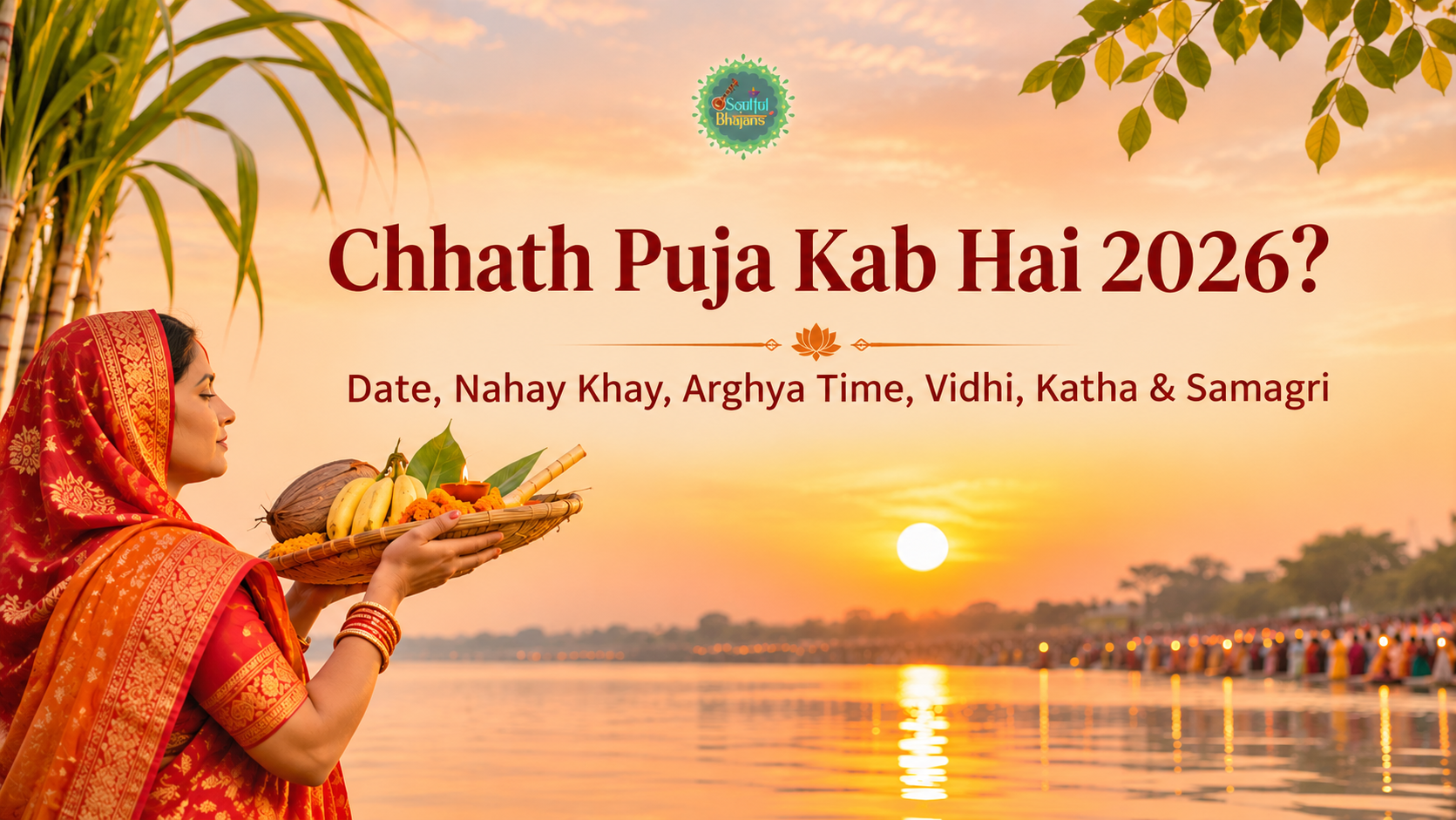
Chhath Puja is one of the most sacred festivals dedicated to Surya Dev and Chhathi Maiya. Celebrated with devotion, fasting and offerings to the Sun, it is a time to express gratitude for life, health and family wellbeing.
Chhath Puja Kab Hai in 2026?
Chhath Puja 2026 is on Sunday, 15 November, the day of Sandhya Arghya on Kartik Shukla Shashthi. The four-day festival begins on Friday, 13 November, with Nahay Khay and concludes on Monday, 16 November, with Usha Arghya and parana.
Chhath Puja 2026 Date and Kartik Shukla Shashthi
Chhath Puja falls on the sixth day of the bright fortnight of Kartik, known as Kartik Shukla Shashthi. The main evening offering is made to the setting Sun, followed by prayers to the rising Sun the next morning.
Chhath Puja 2026 Calendar
| Ritual | Day and Date |
| Nahay Khay | Friday, 13 November 2026 |
| Kharna | Saturday, 14 November 2026 |
| Sandhya Arghya | Sunday, 15 November 2026 |
| Usha Arghya and Parana | Monday, 16 November 2026 |
The strict, approximately 36-hour nirjala fast begins after Kharna prasad on the evening of 14 November.
Sandhya and Usha Arghya Time 2026
Sandhya Arghya is offered at sunset on 15 November, while Usha Arghya is offered at sunrise on 16 November. Devotees usually stand in a river, pond or other water body while offering prayers.
Sunset and sunrise timings vary by location. Check a reliable local Panchang for the exact timings in Patna, Ranchi, Varanasi, Delhi or Kolkata before publishing or planning your puja.
What Is Chhath Puja? (Chhath Puja Kya Hai)
Chhath Puja is a four-day Hindu festival dedicated to Surya Dev and Chhathi Maiya. It is mainly celebrated in Bihar, Jharkhand, eastern Uttar Pradesh, Nepal and by communities living abroad. Devotees observe a fast and offer arghya to the setting and rising Sun, praying for health, prosperity and the wellbeing of their children.
Chhath Puja Kyu Manaya Jata Hai?
Chhath Puja is observed to thank Surya Dev for providing life and energy and to seek Chhathi Maiya’s blessings for children and family wellbeing. Traditional stories connect the festival with King Priyavrat, Mata Sita, Draupadi and Karna.
Priyavrat and Malini Katha
According to a popular story, King Priyavrat and Queen Malini were distressed because they had no children. With the blessings of Shashthi Devi, also worshipped as Chhathi Maiya, they were blessed with a child. This story is associated with prayers for children and family happiness.
Mata Sita, Draupadi and Karna Stories
Traditions also connect Chhath with Mata Sita’s worship of the Sun, Draupadi’s prayers during difficult times and Karna’s devotion to Surya Dev. These stories reflect the festival’s themes of faith, gratitude and perseverance.
Who Is Chhathi Maiya?
Chhathi Maiya is the goddess worshipped alongside Surya Dev during Chhath Puja. In folk belief, she is associated with Shashthi Devi, the protector of children, and is also described in some traditions as the sister of Surya Dev or Usha. Devotees pray to her for the health and long life of their children.
Chhath Puja Vidhi: 4 Days Step by Step
Day 1: Nahay Khay
Devotees take a holy bath, clean the home and prepare a simple, sattvic meal. The food is traditionally prepared with care and purity.
Day 2: Kharna
Devotees observe a day-long fast and break it after sunset with prasad, commonly kheer and roti. The nirjala fast begins after this offering.
Day 3: Sandhya Arghya
At sunset, devotees gather near a river, pond or other water body. They offer arghya to the setting Sun using a bamboo soop filled with fruits, thekua and other offerings.
Day 4: Usha Arghya and Parana
Devotees offer arghya to the rising Sun. After prayers, the fast is concluded through parana, traditionally by sharing prasad with family and others.
Chhath Puja Samagri List
Common Chhath Puja samagri includes:
- Bamboo soop and daura
- Thekua, bananas, coconut and sweet lime
- Sugarcane
- Ginger and turmeric plants
- Diya, kalash, sindoor and akshat
- New clothes
- Ingredients for preparing kheer
Choose fresh, unbroken fruits and keep the offerings clean and sattvic.
Chhath Vrat Niyam and Rules
Chhath vrat is traditionally observed with discipline and cleanliness. Common practices include:
- Maintaining cleanliness while preparing prasad.
- Eating sattvic food and avoiding onion and garlic in prasad.
- Following the traditional nirjala fast after Kharna.
- Preparing offerings with care and devotion.
Fasting practices can vary by family and region. Those with health concerns should seek appropriate medical advice before undertaking a strict fast.
Chhath Prasad: Thekua, Kheer and Fruits
Thekua is one of the most recognisable offerings of Chhath Puja. Kheer, roti, bananas, coconut, sugarcane and other seasonal fruits are also offered to Surya Dev and Chhathi Maiya. Prasad is prepared and shared as an expression of devotion and gratitude.
Chhath Puja in Bihar, Jharkhand, UP, Nepal and Abroad
Chhath Puja is especially prominent in Bihar, Jharkhand, eastern Uttar Pradesh and Nepal. Devotees gather at riverbanks and community ghats, while families abroad often perform the rituals at local water bodies or suitable home arrangements. The dates remain the same, though local sunrise and sunset timings differ.
Significance and the Science of Surya Upasana
Chhath Puja celebrates gratitude towards the Sun, whose light supports life on Earth. The rituals also bring families and communities together through fasting, preparation and shared offerings. Devotees believe that worshipping Surya Dev and Chhathi Maiya brings blessings for health and wellbeing.
Chhath Geet and Chhathi Maiya Songs
Chhath geet are an important part of the festival. Devotional songs dedicated to Surya Dev and Chhathi Maiya create a sacred atmosphere during the preparations and arghya rituals.
Listen to Jai Chhathi Maiya and other traditional devotional videos as you prepare for the festival. You can also explore the benefits of listening to bhajans.
Chhath Puja Wishes and Messages in Hindi and English
Hindi wishes
- छठी मैया और सूर्य देव आपके परिवार को सुख, शांति और समृद्धि दें।
- छठ पूजा की हार्दिक शुभकामनाएं! आपके जीवन में खुशहाली और सकारात्मकता बनी रहे।
English wishes
- May Chhathi Maiya and Surya Dev bless your family with health, peace and happiness.
- Wishing you a blessed Chhath Puja filled with devotion, gratitude and joy.
Chhath Puja Meaning in English and Hindi
In English, Chhath Puja is a festival of Sun worship and gratitude. The word “Chhath” is associated with “sixth,” referring to Shashthi, the sixth day of the lunar fortnight.
हिंदी में, छठ पूजा सूर्य देव और छठी मैया की उपासना का पर्व है। यह जीवन, स्वास्थ्य और परिवार की खुशहाली के लिए आभार व्यक्त करने का अवसर है।
Frequently Asked Questions
Chhath Puja kitne tarikh ko hai?
The main day of Chhath Puja 2026 is Sunday, 15 November. The four-day festival runs from 13 to 16 November.
Chhath Puja kab se start hai?
Chhath Puja begins with Nahay Khay on Friday, 13 November 2026.
Chhath Puja kitne din ka hota hai?
Chhath Puja is a four-day festival. The strict nirjala fast lasts approximately 36 hours, beginning after Kharna prasad.
Chhath Puja ki kahani kya hai?
Popular stories connect Chhath Puja with King Priyavrat and Malini, Mata Sita, Draupadi and Karna. These traditions highlight devotion to Surya Dev and prayers for family wellbeing.
Chhath Puja ka itihas aur mahatva kya hai?
Chhath Puja is rooted in the tradition of Surya worship. It is observed to express gratitude for the Sun’s life-giving energy and to pray for health and family wellbeing.
Chhath vrat ke niyam kya hain?
Common practices include cleanliness, sattvic food, carefully prepared prasad and a traditional nirjala fast after Kharna. Observances may vary by family.
Bihar mein Chhath Puja kab hai?
Chhath Puja in Bihar follows the same 2026 dates: 13 November for Nahay Khay, 14 November for Kharna, 15 November for Sandhya Arghya and 16 November for Usha Arghya.
Chhath Puja meaning in English?
Chhath Puja means a festival of Sun worship, observed on the sixth day of Kartik Shukla Paksha to honour Surya Dev and Chhathi Maiya.
Related festival guides: Diwali 2026 date and 5-day calendar, Bhai Dooj 2026, Govardhan Puja (Annakut), Laxmi Puja and the Festivals collection.